26
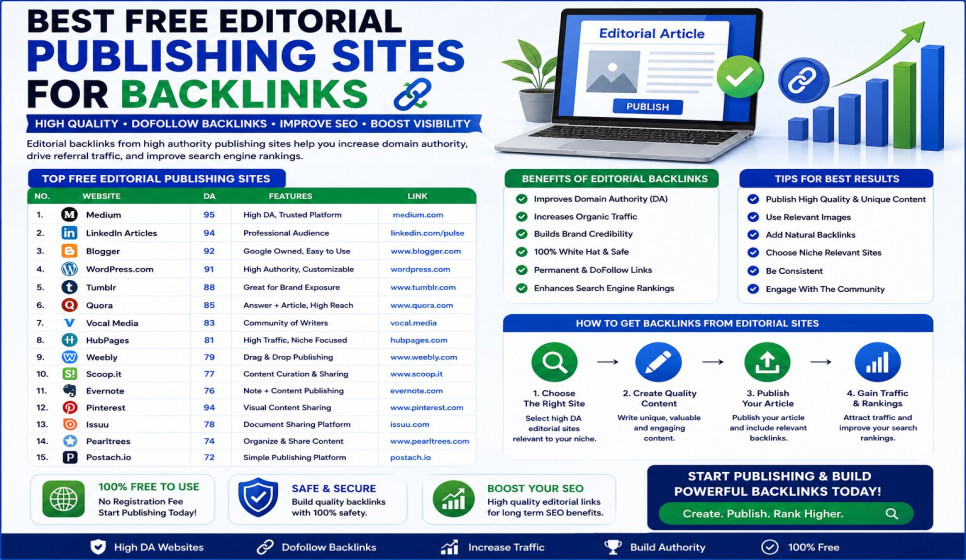
JulBest Free Editorial Publishing Sites for Backlinks
What Are Editorial Backlinks?
Editorial backlinks are links that appear naturally within useful, informative content. They are typically included because they add value to readers rather than being inserted solely for SEO purposes.
For example, if you write an in-depth article about SEO techniques and reference a detailed guide on your own website, that contextual link can serve as an editorial backlink when published on a reputable platform.
These backlinks are generally more valuable than links from low-quality directories or automated submissions because they are surrounded by relevant, high-quality content.
Why Editorial Backlinks Subject?
Editorial backlinks offer several SEO and marketing benefits, including:
- Improve website authority
- Increase search engine rankings
- Drive targeted referral traffic
- Build trust and credibility
- Strengthen your brand reputation
- Support long-term organic growth
- Help search engines discover new pages
- Diversify your backlink profile
A well-balanced SEO strategy should prioritize quality editorial links over large numbers of low-value backlinks.
Features of Good Editorial Publishing Sites
Before publishing content, consider whether a website offers:
- High domain authority
- Quality editorial standards
- Relevant audience
- Original content requirements
- Proper content moderation
- Strong organic traffic
- Good user engagement
- Long-term content availability
Publishing on reputable websites provides greater long-term SEO value than posting on low-quality platforms.
Best Free Editorial Publishing Sites
Here are some widely used publishing platforms where you can share valuable content and potentially earn editorial backlinks sites .
1. Medium
Medium is one of the most popular publishing platforms for writers, marketers, and businesses. Well-written articles can receive organic visibility while allowing contextual links where appropriate.
Best for:
- Tutorials
- Business articles
- SEO guides
- Technology
- Marketing
2. LinkedIn Articles
LinkedIn allows professionals to publish long-form articles that reach business audiences.
Benefits include:
- Professional exposure
- Brand authority
- Industry networking
- Referral traffic
3. Blogger
Google's Blogger platform remains a useful free publishing option for creating informative articles.
Ideal for:
- Educational content
- Business updates
- Case studies
4. WordPress.com
WordPress.com provides free blogging with an easy-to-use editor.
Advantages include:
- SEO-friendly structure
- Professional appearance
- Easy content management
5. Substack
Substack focuses on newsletters but also serves as an excellent editorial publishing platform.
Great for:
- Industry insights
- Weekly updates
- Expert commentary
6. Hashnode
Hashnode is especially useful for developers and technology professionals.
Suitable topics include:
- Programming
- Software development
- AI
- Cloud computing
7. DEV Community
Developers frequently publish technical tutorials and programming guides on DEV Community.
Ideal for:
- Coding tutorials
- Framework comparisons
- Web development
8. HubPages
HubPages allows writers to publish informative evergreen articles across many topics.
Popular categories include:
- Education
- Technology
- Lifestyle
- Business
9. Vocal Media
Vocal Media supports writers in multiple niches.
Popular content includes:
- Finance
- Marketing
- Business
- Personal development
10. Tumblr
Tumblr combines blogging with social sharing, making it useful for brand awareness and content distribution.
How to Create High-Quality Editorial Content
Publishing on respected platforms requires useful, original content.
Follow these best practices:
Write Original Articles
Avoid duplicate content. Every article should provide unique insights and practical information.
Focus on User Intent
Answer readers' questions with clear, actionable advice.
Use Proper Headings
Organize your article with descriptive headings to improve readability.
Add Statistics and Examples
Real examples increase credibility and reader engagement.
Include Natural Internal References
Only include links that genuinely help readers understand the topic better.
Optimize for SEO
Include:
- Primary keyword
- Related keywords
- Meta description
- Engaging title
- Readable formatting
Editorial Backlink Best Practices
To maximize SEO value:
Publish Consistently
Regular publishing builds authority over time.
Target Relevant Niches
Choose websites related to your industry whenever possible.
Prioritize Quality Over Quantity
A few authoritative editorial backlinks often outperform hundreds of low-quality links.
Build Relationships
Engage with editors and publishing communities to increase future opportunities.
Update Existing Articles
Refreshing content helps maintain relevance and can improve performance.
Mistakes to Avoid
Many beginners make SEO mistakes that reduce backlink effectiveness.
Avoid:
- Keyword stuffing
- Thin content
- Duplicate articles
- Irrelevant backlinks
- Excessive promotional language
- Buying low-quality editorial placements
- Publishing on spam websites
- Ignoring content quality
How Editorial Backlinks Improve SEO
Editorial backlinks contribute to SEO in several ways:
- Increase website trust
- Improve page authority
- Enhance topical relevance
- Support keyword rankings
- Generate referral traffic
- Encourage faster indexing
- Build long-term authority
When combined with excellent on-site SEO and useful content, editorial publishing becomes a sustainable strategy for organic growth.
Suggested Content Strategy
A balanced editorial publishing plan could include:
- Publish 2–4 high-quality articles each month.
- Focus on solving real problems for your audience.
- Share articles on social media and professional networks.
- Update older content regularly.
- Track referral traffic and keyword improvements using analytics tools.
Over time, this consistent approach can strengthen your site's authority and visibility.
Frequently Asked Questions (FAQs)
ANSWER:
Good mentions from editorial sites can help a website get found and bring in visitors from other sites. Their value for SEO depends on how relevant they are, how trustworthy the site is, where the link appears, and if the link fits naturally in useful content.
How should I choose an editorial publishing website?
ANSWER:
Look at how well the site matches your topic, how strict their editing standards are, the quality of their readers, their content rules, their reputation, and whether they accept real contributions instead of only focusing on getting links.
What type of content works best for editorial publishing?
ANSWER:
Original research, practical guides, expert opinions, industry analysis, tutorials, case studies, and educational articles usually work better than thin content made mainly to get backlinks.
Should every editorial backlink use keyword-rich anchor text?
ANSWER:
No.
The text used in the link should describe where it's linking naturally and fit with the rest of the content. Using too many exact match keywords can make a link profile look unnatural.
Are all free editorial backlinks valuable?
ANSWER:
Not all.
A free link doesn’t automatically mean it's valuable. Links from unrelated, low-quality, or spammy websites might not help and shouldn’t be sought just to increase link count.
Can editorial backlinks generate referral traffic?
ANSWER:
Yes.
If an article reaches the right audience, readers might click on a link to your website.This can bring in targeted visitors in addition to any SEO benefits.
How can I build editorial backlinks safely?
ANSWER:
Create real value by publishing helpful content, target sites that are relevant, follow each site’s guidelines for contributors, disclose any connections when needed, and avoid using automated tools or making content just to manipulate search rankings.
Final Thoughts,
Free editorial publishing sites are a great way to share your knowledge, connect with new people, and get helpful links to your website through good content. Instead of trying to get a lot of low-quality links, focus on writing articles that really help readers. This method matches today's best search practices and helps your website grow steadily over time.
The best ways to get backlinks through editorial content are based on being original, relevant, consistent, and helpful. By sharing useful information on trustworthy websites and linking naturally when it makes sense, you can build your website's credibility, boost your search rankings, and become a reliable name in your field.


