02
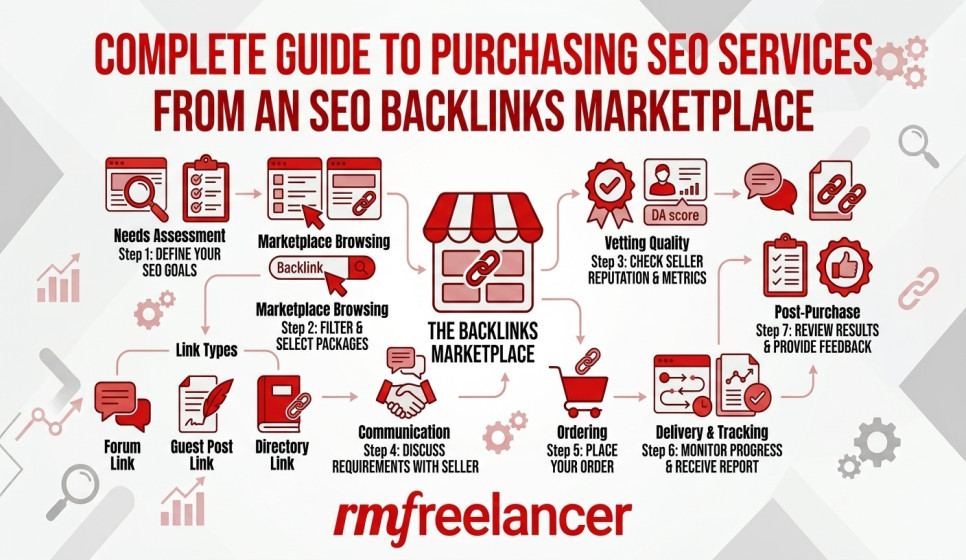
OctComplete Guide to Purchasing SEO Services from an SEO Backlinks Marketplace
An SEO backlinks marketplace links website owners with outreach professionals, digital public relations teams, niche editors, and link-building agencies. While these services can enhance authority, a long list of domains, low prices, or promises of instant rankings do not guarantee that a backlink will benefit your business.
Assess backlinks within the context of a broader SEO strategy. Prioritize relevant placements, reputable websites, natural context, clear reporting, and realistic expectations. This guide outlines how to choose a provider and minimize risks.
Understand What You Are Purchasing
A backlink refers to a link from another website to a page on your site. Search engines may consider links as one indication of authority and relevance; however, not all links hold the same value. A link can also drive referral traffic, introduce your brand to a new audience, or bolster a public relations effort.
Marketplace listings may offer guest posts, niche edits, resource-page links, blogger outreach, digital PR, citations, press placements, or mixed packages. These services vary: a well-researched editorial mention is not equivalent to an automated link on an unrelated domain.
Clarify the deliverables: number of placements, target pages, type of websites, relevance, anchor-text strategy, turnaround time, reporting, and replacement policy.
Establish a Business Goal First
Avoid purchasing links merely because a competitor has more referring domains. Begin with a clear business objective. You might wish to boost visibility for a commercial service, attract referral traffic from industry publications, enhance a new product page, or build brand recognition in specific markets.
Select target pages that truly warrant attention. Content such as a helpful guide, research report, product comparison, or service page is typically easier to promote than a poorly constructed page created solely for link purposes. Evaluate existing content before ordering placements and address any significant technical or usability issues first.
Draft a brief that includes your website, audience, target countries, topics, target pages, restricted industries, language, and success metrics. This helps prevent placements that meet an order but do not aid your business.
Assess Marketplace Providers
Look beyond a seller’s star rating. Read recent reviews for insights on communication, transparency, placement quality, and whether links stayed active. A provider with numerous sales may be efficient, but volume alone does not indicate that its websites are relevant or thoroughly vetted.
Examine relevant case studies and review publishing sites yourself. Consider factors such as audience, topic, original content quality, traffic, editorial standards, outbound links, and reputation. A third-party domain metric serves only as one indicator.
Inquire whether the provider conducts manual outreach, owns websites, utilizes a network, or employs subcontractors. Understand the criteria for site selection and how their inventory is updated. Vague responses can be a red flag.
Know the Warning Signs
Steer clear of offers that promise thousands of backlinks, guaranteed first-page rankings, permanent control over search results, or instant authority. Exercise caution with extremely low-cost packages, automatic profile links, comment spam, spun articles, hidden links, private networks, and placements on unrelated websites.
A provider who conceals domain information, reuses identical articles, or claims that every link conveys authority may be hiding critical details. Manipulative ranking gains can vanish, while poor placements can harm customer trust.
No marketplace provider can control algorithms, competitor actions, website modifications, or future editorial decisions. Professional sellers will clarify limitations instead of selling false assurances.
Compare Placement Quality, Not Domain Counts
While a list of 100 domains may seem appealing, the more pertinent question is how many of them are relevant, credible, and capable of reaching your target audience. A single strong placement in a reputable industry publication can be more valuable than dozens of weak links.
Verify that the linking page has a valid reason for mentioning your site. Content should be original and valuable. Assess whether the website primarily publishes content or mainly sells links; be wary of unrelated categories and excessive outgoing links.
Request a report that includes the URL, linking page, target page, anchor text, publication date, and quality information. Do not accept unverifiable screenshots or domain lists.
Choose Anchor Text and Target Pages with Care
Anchor text refers to the clickable wording of a link. Repeating exact commercial keywords across numerous placements can appear unnatural and poses unnecessary risk. A balanced strategy may incorporate brand names, plain URLs, descriptive phrases, and naturally varied wording.
Let the context dictate the anchor text. The link should help readers grasp where they will be directed and why the destination is beneficial. Avoid inserting a keyword into an article if it disrupts the flow. Often, linking to a strong informational asset or the homepage is more organic than directing every link to a sales page.
Discuss your target-page strategy with the provider before publication rather than after placements have been made.
Inquire About Content and Editorial Control
Clarify who is responsible for researching, writing, editing, and approving each article. Request original content tailored to the publication’s audience and ask if you can review drafts and request factual corrections.
Clarify disclosure requirements. Paid placements may need labeling under relevant laws, platform guidelines, or publication rules. Transparency is preferable to disguising promotional content as independent coverage.
Confirm who owns the article and whether it can be edited, removed, or republished in the future. Keep copies of approved drafts and live URLs for your records.
Begin With a Small Test
Avoid starting with the largest package. Place a limited number of placements and evaluate the provider’s research quality, communication, content quality, delivery accuracy, and reporting. Ensure that the published sites align with the agreed criteria and that the links appear in the promised context.
A test helps determine whether the seller adheres to instructions. If the delivery includes irrelevant domains, low-quality articles, or missing information, enlarging the order will only increase exposure without resolving the issue.
For larger campaigns, utilize milestones. Approve the target-site criteria first, then review proposed opportunities, and finally evaluate the published placements.
Measure More Than Rankings
Monitor the number and quality of referring domains, link relevance, referral visits, impressions, rankings for significant topics, conversions, and assisted revenue. Establish a baseline prior to the campaign to differentiate genuine improvements from normal fluctuations.
Some placements may enhance exposure or referral traffic without immediately affecting rankings. Evaluate results beyond a singular keyword or short-term movement, taking into account seasonality, updates, new content, competitors, and algorithm changes.
A reliable provider reports successfully completed placements, live URLs, target pages, anchor text, publication dates, and any commitments for replacements or maintenance. Reports should facilitate easy verification.
Safeguard Your Website and Budget
Never grant a provider ownership of your domain, hosting, analytics account, or business profile. Backlink services typically do not require these permissions. Keep payment documentation, instructions, evidence, and communication regarding disputes within the marketplace when its policies offer buyer protection.
Establish a budget and clarify the protocol for instances where a placement is rejected, removed, redirected, or altered. Inquire about how long links are expected to remain live and whether replacements are part of the service. Be cautious with “permanent” links that a provider cannot control.
Maintain a spreadsheet documenting every placement, invoice, approval, and outcome. This record enables you to evaluate return on investment and respond swiftly if a problematic link requires review.
Frequently Asked Questions (FAQs)
What is an SEO backlinks marketplace?
ANSWER:
It is an online platform where website owners can evaluate and acquire link-building, outreach, digital PR, and related SEO services from independent suppliers or agencies.
Are all backlinks beneficial for SEO?
ANSWER:
No. Their value depends on factors such as relevance, editorial context, website authority, placement quality, and potential referral traffic. A large number of unrelated links may offer minimal advantages.
Can a backlinks provider assure improved rankings?
ANSWER:
No. Rankings are influenced by numerous factors, including content quality, technical performance, competition, user behavior, and algorithm updates. A reputable provider should not guarantee a specific ranking.
What qualifies as good backlink placement?
ANSWER:
Good placement appears on a relevant, trustworthy website and provides readers with a legitimate reason to visit the linked page. It should be surrounded by helpful, original content rather than forced phrases.
Should I purchase a package with thousands of links?
ANSWER:
Generally not. Large automated packages often include low-quality, irrelevant, or risky links. A smaller campaign featuring carefully selected placements is typically easier to assess and manage.
What details should a backlink report contain?
ANSWER:
The report should include the linking domain, live page URL, target page, anchor text, publication date, placement type, and any terms regarding replacement or maintenance.
Is guest posting still effective for link building?
ANSWER:
Guest content can be beneficial when it is original, relevant to the publication’s audience, and created mainly to add value. Generic articles published solely to insert links are an ineffective strategy.
How many backlinks should I acquire each month?
ANSWER:
There is no one-size-fits-all answer. Allow opportunities, content quality, budget, and natural campaign growth to dictate the rate rather than adhering to an arbitrary monthly goal.
Do backlinks need to stay live indefinitely?
ANSWER:
No provider can entirely control another website indefinitely. Inquire about how long placements are expected to last and whether the seller offers replacements for early removals.
How can I mitigate risks in a backlink campaign?
ANSWER:
Utilize a clear brief, evaluate proposed sites, vary natural anchor text, start with a small test, retain ownership of your accounts, and avoid providers that obscure their methods or promise guaranteed rankings.
Closing Remarks,
Safe backlink acquisition necessitates quality control. Define a clear goal, investigate providers, inspect placements, dismiss manipulative guarantees, and conduct careful testing. Prioritize relevant sites, transparent reports, natural context, and secure ownership. Quality backlinks can foster sustainable growth.
Have questions about our services? Contact us today for fast, reliable, and professional customer support always.
Website: https://rmfreelancer.com/
Email: support@rmfreelancer.com
Phone: +1 307-243-8976
RMFreelancer Office:
30 N Gould St, Ste R, Sheridan, WY 82801, USA


