11
AugFreelance Marketplace for Businesses
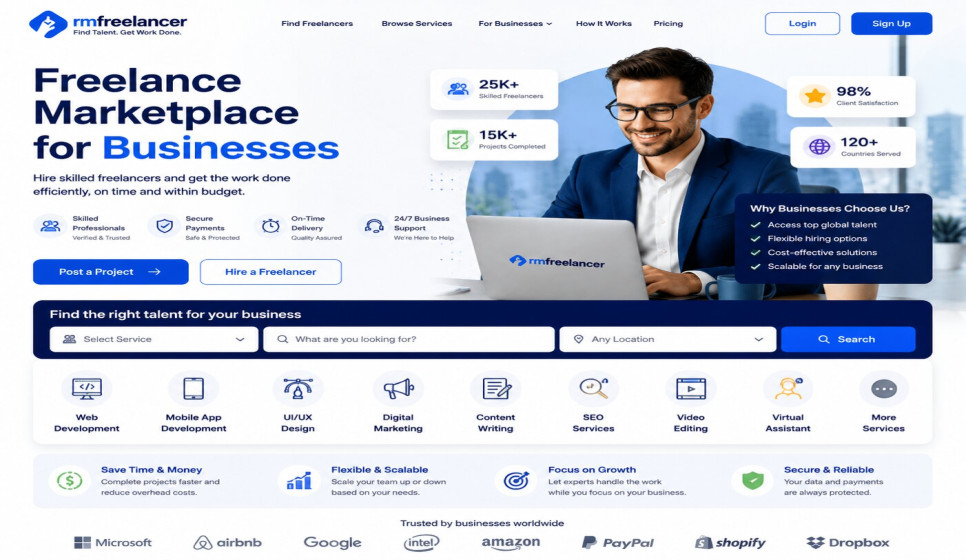
The freelance marketplace for businesses is a contemporary digital platform created to link organizations with talented independent professionals from across the globe. It offers companies a straightforward, trustworthy, and efficient method to locate experts for temporary projects, ongoing tasks, and specialized business requirements. Concurrently, it provides freelancers with substantial work opportunities, avenues for professional development, and an expanded network of clients.
In today's environment,
businesses often seek specialized talent without the financial burden and commitment of hiring full-time staff. A company may need a graphic designer for a branding initiative, a software developer to create a mobile application, a digital marketer to oversee an advertising campaign, or an accountant to prepare financial statements. Traditional hiring processes can be slow, costly, and ineffective for these specific needs. A freelance marketplace addresses this challenge by establishing a versatile setting where businesses can swiftly find professionals based on their abilities, experience, availability, budget, and past work.
The platform acts as a centralized venue where companies can post projects and receive bids from qualified freelancers. Organizations can outline their goals, expected deliverables, deadlines, required skills, and estimated budgets. Freelancers can then browse available projects and submit proposals detailing how they can assist, the estimated duration, and their rates. This procedure allows businesses to evaluate multiple professionals before making an informed hiring decision.
One significant benefit of the marketplace is its wide array of services. Companies can find experts in areas such as web development, mobile app development, software engineering, graphic design, video editing, animation, content writing, translation, customer support, sales, marketing, search engine optimization, social media management, data entry, virtual assistance, business consulting, legal support, accounting, and administration. This diversity makes the platform appealing to startups, small enterprises, emerging businesses, and large corporations alike.
Trust and transparency are fundamental to the marketplace's design.
Each freelancer can develop a professional profile that includes a biography, a list of skills, work experience, certifications, a portfolio, hourly rates, completed projects, and client testimonials. Businesses can utilize this information to assess a freelancer before deciding to hire them. Ratings and reviews provide additional insights into the service provider's quality, communication, reliability, and professionalism.
Businesses can also establish verified profiles that showcase their industry, location, workforce size, website, and history of hiring. This information helps freelancers identify genuine opportunities and select clients that align with their preferences. A transparent rating system enables both parties to evaluate one another upon project completion. This reciprocal feedback mechanism promotes professional conduct and accountability across the platform.
Another critical component of the marketplace is its project management system. Once a business selects a freelancer, both parties can engage via an integrated messaging system. They can exchange documents, discuss requirements, provide feedback, and track progress without relying on multiple external applications. The platform may also feature video calls, task lists, file storage, deadline reminders, and project milestones to facilitate more organized collaboration.
For larger projects,
businesses can split tasks into milestones. Each milestone may stipulate specific deliverables and payment conditions. For instance, a company hiring a website developer might set distinct milestones for planning, design, development, testing, and final launch. This arrangement provides businesses with greater control over project progress while ensuring that freelancers are compensated as they complete agreed phases of work.
Secure payment processing is vital to the success of a freelance marketplace.
The platform can hold client payments in an escrow account until the freelancer fulfills the required tasks. Once the business approves the completed work, the payment is released. This mechanism safeguards both parties and mitigates the risk of non-payment or incomplete work. Various payment options, including bank transfers, credit cards, mobile payment services, and international payment providers, may be supported by the marketplace.
The platform can generate revenue through service fees charged to businesses, freelancers, or both parties. Other sources of income may include premium memberships, highlighted project listings, recruitment services, advertising, payment processing fees, and enterprise packages. Basic memberships offer access to standard features, while premium options may present advanced search tools, priority customer support, comprehensive reporting, verified talent recommendations, and reduced transaction fees.
An advanced search and matching system can greatly enhance user experience. Businesses can seek freelancers using filters such as skill category, experience level, location, language, availability, hourly rate, project history, and ratings. An intelligent recommendation system can analyze project requirements and suggest professionals who are most likely to align well with those needs. This functionality minimizes the time businesses spend sifting through unsuitable applications.
The platform can also accommodate various work arrangements. Some companies may require a freelancer for a one-off project, while others could need ongoing assistance or a long-term contract. Freelancers might offer hourly services, fixed-price packages, monthly retainers, or subscription-based support. This flexibility empowers businesses to select a working model that fits their budget and operational demands.
Security and privacy should remain top priorities.
The marketplace must protect user accounts with secure authentication, encryption, identity verification, fraud detection, and monitoring for suspicious activities. As businesses may share confidential information—including product plans, customer data, financial documents, or proprietary software specifications—strong privacy policies and secure document-sharing systems are essential for maintaining user trust.
Dispute resolution is another critical feature. Occasionally, disagreements can arise regarding deadlines, project quality, alterations in scope, or payment terms. The platform can offer a formal procedure for both parties to present evidence, communicate with a support team, and pursue a fair resolution. Clear contracts, defined deliverables, revision limits, and communication records can help avoid many disputes before they escalate.
This marketplace also presents valuable opportunities for freelancers, particularly those in regions with limited local employment options. Skilled professionals can collaborate with international clients, build a strong reputation, gain new skills, and earn income commensurate to the value of their services. The platform can offer freelancers educational resources, career support, portfolio-building tools, pricing guidance, and training programs.
For businesses,
the primary advantage is access to a global talent pool. Instead of confining recruitment efforts to a single city or country, organizations can discover professionals with specialized expertise from diverse markets and cultures. This can stimulate innovation, enhance productivity, lower operating costs, and expedite project completion.
The freelance marketplace is particularly advantageous for startups. New ventures typically operate with constrained budgets and small internal teams. By hiring freelancers, startups can tap into high-quality expertise without incurring the long-term expenses associated with salaries, office space, equipment, and employee benefits. Freelancers can assist startups in testing concepts, launching products, developing marketing materials, and managing crucial business functions during growth phases.
Looking ahead, the platform may incorporate artificial intelligence tools to refine project descriptions, recommend suitable freelancers, estimate costs, identify potential risks, and automate routine administrative tasks. It could also provide skill assessments, verify credentials, automate contracts, facilitate multilingual communication, and offer performance analytics.
Frequently Asked Questions (FAQs)
1. What is a freelance marketplace for businesses?
ANSWER:
A freelance marketplace for businesses is a digital platform that assists companies in connecting with proficient freelancers and independent experts to execute projects, tackle business challenges, and obtain specialized knowledge.
2. Why should businesses utilize a freelance marketplace?
ANSWER:
Businesses can take advantage of freelance marketplaces to quickly locate qualified professionals, lower hiring expenses, tap into a global talent pool, easily scale projects, and accomplish tasks without the obligation of long-term employment.
3. What kinds of services can businesses contract freelancers for?
ANSWER:
Businesses can engage freelancers for services such as software development, website design, graphic design, marketing, content creation, data analysis, consulting, virtual assistance, video production, and various other professional services.
4. How do businesses identify the right freelancer?
ANSWER:
Businesses can explore freelancer profiles based on skills, experience, portfolios, ratings, availability, location, budget, and past project history to find the most suitable match.
5. How do I submit a project on the marketplace?
ANSWER:
Businesses can generate a project listing by outlining their needs, objectives, budget, timeline, and required skills. Freelancers can then assess the project and present proposals.
6. How can businesses assess freelancer quality?
ANSWER:
Businesses can evaluate freelancer profiles, portfolios, ratings, client testimonials, certifications, completed projects, and prior work samples before making a hiring decision.
7. What is the cost to hire a freelancer?
ANSWER:
The cost varies based on the freelancer’s expertise, project complexity, type of service, and pricing structure. Businesses can opt for hourly rates, fixed-price projects, or milestone-based payments.
8. Are payments secure on the marketplace?
ANSWER:
Yes. Freelance marketplaces generally offer secure payment systems, payment protection, and transaction monitoring to ensure safe transactions between businesses and freelancers.
9. Can businesses collaborate with freelancers remotely?
ANSWER:
Absolutely. Freelance marketplaces facilitate collaboration between businesses and professionals located in various places through online communication, file sharing, project management tools, and digital workflows.
10. How do businesses oversee freelance projects?
ANSWER:
Businesses can manage projects utilizing platform tools that provide messaging, milestone tracking, file sharing, deadlines, progress updates, and feedback management.
11. Can businesses hire freelancers for ongoing work?
ANSWER:
Yes. Businesses can form lasting relationships with freelancers for repeated projects, continuous support, maintenance, consulting, or long-term partnerships.
12. What occurs if a freelancer fails to meet expectations?
ANSWER:
Businesses can express concerns, request revisions, adhere to the agreed project terms, or utilize the marketplace’s dispute resolution process if necessary.
13. How can businesses safeguard their confidential information?
ANSWER:
Businesses can implement confidentiality agreements, secure communication channels, limited access permissions, and clear project agreements to protect sensitive data.
14. Can startups and small enterprises utilize a freelance marketplace?
ANSWER:
Yes. Freelance marketplaces are particularly advantageous for startups and small businesses as they offer access to skilled professionals without the expense of hiring full-time employees.
15. What advantages do businesses gain from using a freelance marketplace?
ANSWER:
A freelance marketplace provides businesses with time savings, access to specialized talent, reduced operational costs, increased flexibility, and the ability to complete projects with experienced professionals globally.
Final Summary,
a freelance marketplace for businesses transcends the concept of a mere job board. It serves as a comprehensive digital ecosystem for discovering talent, managing projects, processing payments, and fostering long-term professional relationships. By integrating convenience, flexibility, security, and global access, the platform can promote more efficient business operations while granting freelancers the freedom to cultivate sustainable careers. Its success will hinge on sustaining trust, delivering a seamless user experience, safeguarding payments and information, and continuously enhancing the collaborative process between businesses and professionals.
Have questions about our services? Contact us today for fast, reliable, and professional customer support always.
Website: https://rmfreelancer.com/
Email: support@rmfreelancer.com
Phone: +1 307-243-8976
RMFreelancer Office:
30 N Gould St, Ste R, Sheridan, WY 82801, USA


