11
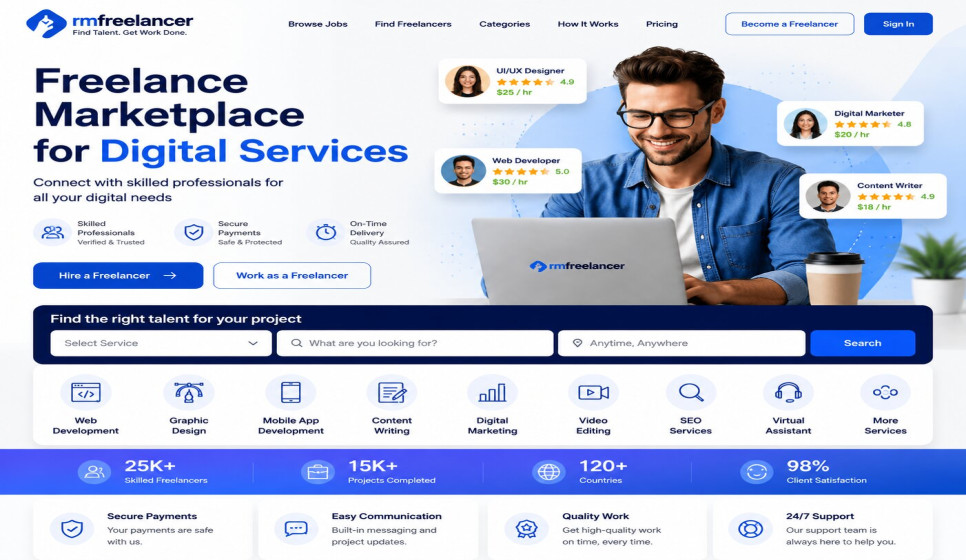
AugFreelance Marketplace for Digital Services
The Freelance Marketplace for Digital Services is an online platform designed to link businesses, entrepreneurs, startups, and individuals with talented freelancers from across the globe. This marketplace offers a convenient and trustworthy environment for clients to discover digital service providers, compare their skills and rates, discuss project requirements, and conduct transactions securely. Freelancers can utilize the platform to display their expertise, attract new clients, build professional relationships, and generate income by offering their services in a competitive digital landscape.
The platform emphasizes making the hiring process for freelance talent straightforward, transparent, and accessible. Many businesses require digital services but may lack the budget or resources to employ full-time staff. At the same time, skilled professionals often find it challenging to secure consistent clients and showcase their work. This marketplace addresses both issues by creating a centralized platform where demand and supply of talent can efficiently converge.
Users can explore a broad range of digital services through the marketplace. These may include website design and development, graphic design, logo creation, content writing, copywriting, search engine optimization, social media management, video editing, animation, digital marketing, mobile app development, data entry, virtual assistance, translation, online tutoring, voice-over work, and business consulting. By consolidating numerous professional categories under one roof, the platform serves as a valuable resource for businesses and individuals in search of specialized support.
Clients begin their journey by registering for an account and either posting a project or searching for specific services. When posting a project, clients provide details about their goals, expected deliverables, budget, preferred deadlines, and necessary skills. Freelancers can then submit proposals outlining how they would fulfill the work. Alternatively, freelancers can establish predefined service packages featuring clear descriptions, pricing, turnaround times, and examples of past work. This allows clients to make informed choices based on the freelancer’s experience, ratings, portfolio, and communication style.
An advanced search and filtering system enables users to quickly locate appropriate professionals. Clients can sift through freelancers by service category, budget, delivery time, location, language, experience level, ratings, and availability. The platform may also implement recommendation technology to suggest freelancers based on a client’s project specifications, thus saving time and enhancing the probability of fostering successful working relationships.
Each freelancer maintains a professional profile that serves as a digital portfolio and business identity. The profile may include a brief biography, a list of skills, work samples, certifications, employment history, client reviews, completed projects, and pricing information. Freelancers can use this profile to convey their personal brand and demonstrate the value they provide. A compelling profile enables clients to assess the freelancer’s abilities before initiating a conversation or placing an order.
Communication is a crucial feature of the marketplace. Clients and freelancers can utilize a built-in messaging system to discuss requirements, share files, ask questions, and provide updates. Keeping communication within the platform ensures a clear record of the project, reducing the likelihood of misunderstandings. Notifications can alert users to new messages, proposals, orders, revision requests, or payment updates.
To safeguard both parties,
the platform includes a secure payment and escrow system. When a client hires a freelancer, the payment may be authorized and held securely until the agreed-upon work is delivered. After reviewing the project, the client can approve the work and release the payment. This arrangement instills confidence in clients that their funds are protected while ensuring freelancers are compensated for their completed work. The system accommodates various payment methods, including debit cards, credit cards, mobile banking, and electronic payment services, based on regional availability.
The marketplace can operate under several business models. One approach is to charge a service fee on finalized transactions, either by deducting a small percentage from the freelancer’s earnings or adding a fee to the client’s payment. Another option is to offer premium subscriptions, providing added visibility, advanced analytics, priority support, or reduced transaction fees. Revenue may also be generated through promoted listings, business accounts, advertising, and customized enterprise offerings.
Trust and safety are pivotal to the success of a freelance marketplace.
The platform should implement identity verification, account monitoring, secure payment processing, and fraud detection tools to protect its users. Freelancers may be required to verify their identities prior to receiving payments, while clients can undergo screenings to mitigate fraudulent activities. A reporting mechanism allows users to flag suspicious conduct, inappropriate content, nonpayment issues, or breaches of platform policies.
A transparent review and rating system helps maintain service quality. Following project completion, clients can evaluate freelancers based on communication, professionalism, quality, and delivery timelines. Freelancers may also provide ratings for clients based on the clarity of project specifications, communication, and payment reliability. These reviews offer valuable information for future users and encourage both parties to act professionally. To ensure fairness, the platform should have guidelines that prevent fake reviews, harassment, and unfair manipulation of ratings.
The platform may also feature a dispute resolution process. If a client feels that the work does not align with the agreed requirements or if a freelancer contends that a client has altered the project scope without additional compensation, either party can seek assistance. The support team can review project communications, submitted documents, deadlines, and the original agreement before reaching a decision. This organized process provides protection while promoting fair resolution of disagreements.
For freelancers,
the marketplace offers more than just a means to secure individual projects. It can assist professionals in developing long-term careers and businesses. Freelancers can monitor their earnings, manage multiple orders, create service packages, offer discounts to returning clients, and track profile performance. Educational resources like career guides, pricing advice, portfolio tips, and marketing tutorials can help newly working freelancers refine their abilities and compete more effectively.
For clients,
the platform streamlines the cost and complexity of outsourcing digital work. Rather than navigating multiple websites or relying solely on personal recommendations, businesses can tap into a diverse network of professionals in one place. Clients can start with smaller projects, compare multiple proposals, and gradually cultivate relationships with trusted freelancers. This flexibility is particularly beneficial for startups, small businesses, nonprofit organizations, students, and entrepreneurs with limited budgets.
The marketplace can facilitate both local and international collaboration. A client in one country may engage a designer, developer, writer, or marketing specialist from another nation. This opens doors for professionals in developing regions to connect with global clientele while allowing businesses to access a broader array of skills and pricing options. Language support, currency conversion, time zone information, and automated payment systems can enhance international cooperation.
An efficient administrative system is vital for managing the platform.
Administrators can oversee user accounts, approve or remove service listings, handle complaints, review payments, analyze marketplace activity, and enforce community guidelines. Analytics dashboards can provide critical insights such as the number of active users, completed orders, popular service categories, average project value, customer retention, and platform revenue. These insights aid the business in enhancing its services and identifying new opportunities.
The platform should be designed with a clean, responsive, and user-friendly interface. It should operate seamlessly across desktop computers, tablets, and mobile devices. Key features should be easily accessible, including account registration, freelancer searches, project postings, messaging, payment tracking, order management, and customer support. An effectively crafted interface is particularly crucial given that users may possess varying levels of technical knowledge.
In the future,
the marketplace could incorporate artificial intelligence tools to enhance productivity and matchmaking. AI may assist clients in composing clearer project descriptions, recommending suitable freelancers, estimating project costs, organizing search results, and identifying potential risks. Freelancers may leverage AI-powered tools for improving proposals, managing tasks, generating reports, or analyzing customer feedback. These technologies should complement human decision-making while ensuring transparency and safeguarding user data.
Frequently Asked Questions (FAQs)
1. What is a freelance marketplace for digital services?
ANSWER:
A freelance marketplace for digital services is an online platform that links businesses, individuals, and organizations with freelancers offering digital solutions such as web development, graphic design, content creation, digital marketing, software development, and various other online services.
2. What types of digital services are available on the marketplace?
ANSWER:
The marketplace provides an extensive array of services, which includes website development, mobile app creation, UI/UX design, graphic artistry, video editing, SEO, social media marketing, content writing, virtual assistance, programming, and business consulting.
3. How do I hire a freelancer for my digital project?
ANSWER:
Clients can explore freelancer profiles, examine portfolios and ratings, compare pricing, engage in discussions with professionals, and hire the freelancer who aligns best with their project specifications.
4. How can freelancers offer their digital services?
ANSWER:
Freelancers can develop a professional profile, detail their skills and services, upload examples of their previous work, establish pricing, and receive project proposals from prospective clients.
5. How does the platform ensure the quality of freelancers?
ANSWER:
The marketplace may implement profile verification, skill evaluations, reviews, ratings, portfolio assessments, and systems for client feedback to maintain a high standard of service quality.
6. How are digital service payments processed?
ANSWER:
Payments are facilitated through secure payment systems. Clients can utilize available payment options, and freelancers receive their payment after completing agreed milestones or delivering approved work.
7. Can I communicate with a freelancer before placing an order?
ANSWER:
Absolutely. Clients can converse with freelancers via the platform to go over project specifics, requirements, timelines, pricing, and any special instructions prior to commencing a project.
8. How long does it take to complete a digital service project?
ANSWER:
The duration for project completion varies based on the complexity, scope, and specifications of the service. Freelancers typically provide estimated delivery times prior to accepting a project.
9. What if I am not satisfied with the delivered work?
ANSWER:
If a client is dissatisfied, they can request revisions in accordance with the project agreement. Many marketplaces also offer dispute resolution assistance to support fair resolution of issues.
10. How can freelancers attract more clients?
ANSWER:
Freelancers can draw in clients by crafting an impressive profile, showcasing high-quality portfolios, maintaining competitive pricing, producing outstanding work, and garnering positive reviews.
11. Are there fees for using the freelance marketplace?
ANSWER:
Most platforms impose service or transaction fees. The specific fees depend on the marketplace’s pricing framework and may differ for freelancers and clients.
12. Why should I use a freelance marketplace for digital services?
ANSWER:
A freelance marketplace provides effortless access to skilled professionals, flexible hiring alternatives, secure payment processes, transparent reviews, and a convenient method to complete digital projects efficiently.
Key Takeaways,
the Freelance Marketplace for Digital Services establishes a practical digital ecosystem for contemporary work. It connects clients with skilled professionals, provides freelancers with new opportunities, supports secure transactions, and promotes flexible employment. By integrating service discovery, communication, project management, payments, reviews, and trust features in a single platform, the marketplace can become a reliable destination for digital services. Its success will hinge on upholding high service quality, protecting users, offering equitable policies, and continuously adapting to the evolving needs of the online workforce.
Have questions about our services? Contact us today for fast, reliable, and professional customer support always.
Website: https://rmfreelancer.com/
Email: support@rmfreelancer.com
Phone: +1 307-243-8976
RMFreelancer Office:
30 N Gould St, Ste R, Sheridan, WY 82801, USA


