17
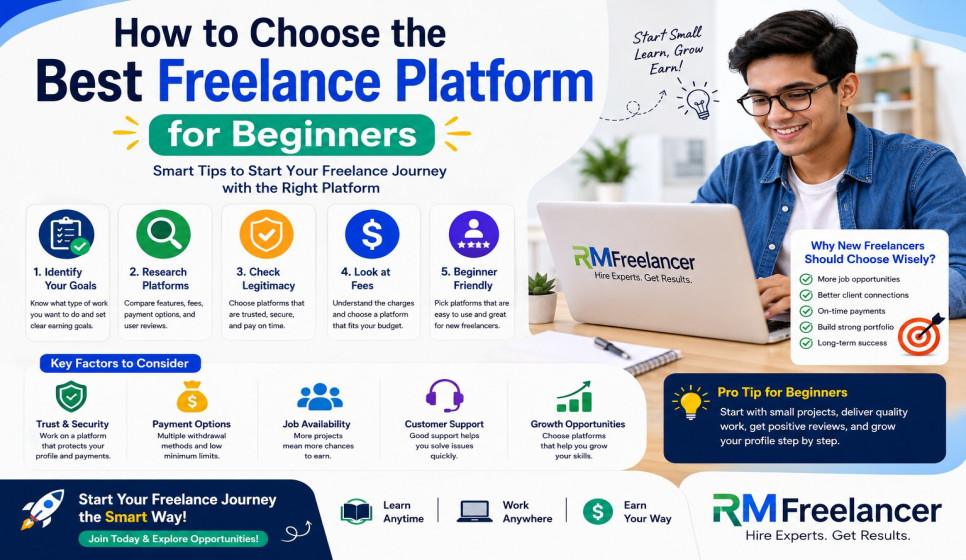
AugHow to Choose the Best Freelance Platform for Beginners
Starting a freelance career online can be thrilling, but selecting the appropriate freelance platform may seem daunting. Those new to freelancing often encounter numerous websites offering freelance jobs, digital services, remote projects, and the chance to connect with clients. Each platform presents unique features, fees, job categories, competition levels, payment systems, and rules.
Determining the optimal freelance platform involves more than just locating the site with the highest number of job postings. The right platform should align with your skills, level of experience, preferred work type, budget, and career objectives.
If you are just starting in freelancing, taking the necessary time to compare platforms will help you sidestep unnecessary issues and direct your efforts towards finding suitable clients. This guide delineates the key factors to consider when selecting a freelance platform as a beginner.
What Is a Freelance Platform?
A freelance platform is an online marketplace that connects independent workers with clients in search of specific services. Depending on the platform, freelancers may apply for posted projects, offer predefined services, or directly communicate with businesses.
Freelance platforms can encompass a wide array of categories, including:
Writing
Graphic design
Programming
Digital marketing
SEO
Data entry
Virtual assistance
Video editing
Translation
Customer support
Online research
Some platforms cater to general freelance work, while others concentrate on particular industries or services.
1.
Assess Your Skills First
Before selecting a platform, determine the services you wish to offer.
If you are a content writer, seek out platforms with a strong demand for writing projects. If you specialize in graphic design, prioritize marketplaces that feature active design opportunities.
Beginners frequently err by joining a platform before establishing what they wish to provide. This can lead to a lackluster profile and unfocused applications.
Opt for one or two services that align with your current skills, and consider expanding your offerings as you gain experience.
2.
Seek Beginner-Friendly Opportunities
Not every freelance platform is equally conducive to newcomers.
Some marketplaces are filled with entry-level projects, while others attract clients seeking highly experienced specialists.
Examine the types of jobs available prior to creating an account. Look for projects relevant to your skills and assess their requirements.
If most available jobs demand several years of experience, advanced certifications, or complex technical know-how, another platform may be a better fit for your current level.
3.
Compare Platform Fees
Freelance platforms may impose fees in various ways.
Some may take a percentage of freelancer earnings, while others may charge clients, freelancers, or both. Certain platforms might also provide optional paid memberships or promotional features.
Before committing to a platform, understand how fees will impact your earnings.
For instance, if you land a project worth $100 and the platform takes a service fee, your actual earnings will be less than the advertised amount.
Always review the most current fee structure and payment terms prior to establishing your freelance rates.
4.
Explore Available Job Categories
A platform is only valuable if it hosts projects that relate to your skills.
Browse the categories and search for your specific service. Investigate how frequently new projects are posted and whether clients appear to be actively recruiting.
You should also assess the quality of the available projects. A platform may advertise thousands of listings, but if only a small fraction aligns with your skills, it may not be the best choice.
Quality and relevance hold more significance than simply counting job numbers.
5.
Assess Competition
Competition is a crucial factor for novices.
Large platforms may feature numerous clients but also draw many freelancers. Smaller platforms may have fewer users yet potentially provide a more focused environment.
Examine existing freelancer profiles within your category. Take note of their experience, portfolios, pricing, reviews, and services offered.
You don’t need to completely avoid competition; instead, find ways to distinguish yourself through a clear service offering, professional portfolio, reasonable pricing, and personalized proposals.
6.
Investigate Client Quality
A reputable freelance platform should attract genuine clients who present clear project descriptions and reasonable expectations.
Before accepting work, research client profiles whenever possible. Check their previous activity, reviews, project history, and payment information provided by the platform.
Be wary if a client promises unusually high compensation for simple tasks or requests suspicious arrangements.
The quality of clients can significantly influence your freelancing experience.
7.
Verify Payment Methods
Payment flexibility is another vital consideration.
Ensure the platform supports payment methods accessible to you. Depending on your country and the platform, options may include bank transfers, electronic payment services, or other approved methods.
Also, check minimum withdrawal amounts, processing times, currency conversion, and any applicable fees.
A platform can feature excellent job opportunities yet remain inconvenient if you cannot easily access your earnings.
8.
Understand Payment Protection
Beginners should pay particular attention to payment protection.
Some platforms implement systems designed to safeguard freelancers when clients default on payment or disputes arise. The exact protection offered can vary by platform and project type.
Review the platform's policies before accepting work. Understand when payment is deemed secured, how disputes are handled, and what evidence may be necessary.
Do not assume all freelance marketplaces provide the same level of protection.
9.
Familiarize Yourself with Platform Rules
Each freelance platform has its own set of terms and policies.
These may include guidelines regarding communication, payments, account usage, content, intellectual property, cancellations, disputes, and prohibited services.
Carefully read the essential rules before getting started. Violating platform policies could lead to warnings, restrictions, or account suspension.
Grasping the rules from the outset can mitigate avoidable issues.
10.
Investigate Profile and Portfolio Features
An effective profile is especially vital for beginners as it helps to convey your skills.
Check whether the platform enables you to include:
A professional profile description
Skills
Portfolio samples
Work history
Certifications
Client reviews
Service descriptions
Portfolio features can be particularly advantageous if you possess limited professional experience.
Select a platform that allows you to showcase your strengths clearly.
11.
Consider the Application Process
Different platforms employ varied methods for connecting freelancers with clients.
Some enable freelancers to submit proposals for individual projects, while others permit freelancers to create service listings that clients can purchase. Some utilize a blend of both approaches.
Reflect on which method aligns with your personality and working style.
If you prefer composing tailored proposals, project-based marketplaces may suit you better. Conversely, if you favor developing a fixed service package, a service-oriented marketplace might be more suitable.
12.
Review Communication Tools
Efficient communication is essential for successful freelance work.
Assess how the platform facilitates communication between clients and freelancers. Look for messaging, file sharing, notifications, and project management features.
Maintaining communication and project details within the platform can also simplify record-keeping should a dispute arise.
Avoid moving payments or critical project agreements outside the platform, particularly if doing so violates its policies or diminishes your protection.
13.
Investigate the Platform's Reputation
Prior to joining a freelance website, research its reputation.
Seek independent reviews and discussions regarding user experiences. Pay attention to recurring complaints concerning payments, account restrictions, customer support, or misleading job postings.
No platform will be universally ideal for every freelancer, but frequent, serious complaints should motivate further investigation.
14.
Assess Customer Support
Effective customer support can prove invaluable when encountering account, payment, or project issues.
Examine how users can connect with support and whether the platform offers useful help resources.
A platform that provides clear documentation and responsive support can make freelancing smoother, particularly for novices who may be unfamiliar with online marketplaces.
15.
Start with One or Two Platforms
New freelancers do not need to enroll in every freelance marketplace.
Managing multiple accounts can hinder your ability to maintain high-quality profiles, respond to clients, update portfolios, and submit strong applications.
Begin with one or two platforms that closely align with your skills. Familiarize yourself with their operations and concentrate on building a robust reputation.
You can expand to additional platforms once you feel confident in your routine.
How to Compare Freelance Platforms
Create a simple comparison based on your priorities.
Consider:
Job availability: Are there enough projects in your category?
Competition: How challenging is it to stand out?
Fees: What percentage will the platform deduct from your earnings?
Payment: Is it convenient to withdraw your money?
Protection: Does the platform offer effective payment and dispute processes?
Profile features: Can you effectively showcase your portfolio?
Client quality: Are project descriptions clear and professional?
Rules: Are the platform policies appropriate for your services?
This comparison can aid you in making a more informed decision.
Build Your Profile After Selecting a Platform
Once you have chosen a platform, develop a professional profile.
Use a clear description that outlines your service and target clientele. List relevant skills and upload your best portfolio samples.
Avoid exaggerating your experience. If you are a novice, focus on your abilities and commitment to delivering reliable service.
An effective profile can create a strong first impression.
Apply Strategically
Do not apply to every project you encounter.
Select jobs that correspond with your skills and carefully review the requirements. Tailor your proposals and include relevant portfolio examples.
High-quality applications are generally more impactful than submitting a large number of generic messages.
Track your applications to identify which types of projects yield responses.
Avoid Common Beginner Mistakes
New freelancers often select platforms based solely on popularity. Others concentrate entirely on securing the lowest fees.
While these factors are significant, they should not be the sole considerations.
Avoid:
Joining too many platforms at once
Offering services you cannot deliver
Imitating other freelancers' profiles
Setting unrealistically low prices
Ignoring platform policies
Accepting dubious projects
Sending generic proposals
Neglecting to clarify project requirements
A cautious approach can save time and safeguard your reputation.
Frequently Asked Questions (FAQs)
1. What should newcomers seek in a freelance platform?
ANSWER:
Newcomers should look for job availability, platform charges, competition levels, payment options, client quality, payment safeguards, profile functionalities, customer assistance, and whether the projects align with their expertise.
2. Which freelance platform is most suitable for newcomers?
ANSWER:
There is no universally best platform; the ideal choice hinges on your skill set, services offered, geographical location, experience, fees, and the types of clients and projects accessible.
3. Can newcomers access freelance platforms without prior experience?
ANSWER:
Yes. Numerous platforms permit newcomers to create profiles and bid on projects without any previous freelance background. A robust portfolio showcasing sample work can help illustrate your capabilities.
4. How can I select a freelance platform that aligns with my skills?
ANSWER:
Determine the service you wish to provide and search each platform for corresponding projects. Opt for a marketplace that maintains steady demand for your particular skill set.
5. Are freelance platforms complimentary for newcomers?
ANSWER:
Some platforms offer free registration but may charge service fees once you begin earning. Others might provide optional paid memberships or additional features. Always check the current fee structure before getting started.
6. How critical are fees on freelance platforms?
ANSWER:
Fees can significantly impact your income, making them a crucial factor. Compare the overall costs of various platforms and evaluate the services and protections offered in exchange.
7. How can I verify if a freelance platform has an adequate number of jobs?
ANSWER:
Search for your specific service and analyze recent listings. Monitor how often relevant projects are posted and assess whether clients seem to be actively recruiting.
8. Should newcomers utilize multiple freelance platforms?
ANSWER:
Starting with one or two platforms can make management easier. Once you familiarize yourself with the process and establish your reputation, you can think about branching out to other marketplaces.
9. How can I recognize credible clients on freelance platforms?
ANSWER:
Examine client profiles, past project activity, ratings, reviews, and payment details where available. Exercise caution with unrealistic offers, vague requirements, or requests for questionable payments.
10. What payment options should I explore when selecting a platform?
ANSWER:
Verify if the platform offers convenient withdrawal methods in your country. Additionally, examine withdrawal minimums, processing times, currency conversion, and associated payment fees.
11. Do freelance platforms offer protection against nonpayment for freelancers?
ANSWER:
Certain platforms provide payment protection or dispute-resolution systems, but the terms differ. Review the platform’s policies thoroughly to comprehend when and how protection is applicable.
12. How does the level of competition on a freelance platform impact its importance?
ANSWER:
Competition is significant since newcomers must differentiate themselves from other freelancers. Nevertheless, a platform with high client demand can still be beneficial if you maintain a targeted profile, relevant samples, and competitive proposals.
13. What should I incorporate in my freelance profile?
ANSWER:
Include a clear description of your services, pertinent skills, professional background, portfolio examples, and any relevant qualifications or experiences. Emphasize information that showcases how you can assist clients.
14. How can newcomers steer clear of scams on freelance platforms?
ANSWER:
Be vigilant regarding unrealistic income claims, demands for upfront payments, dubious payment methods, excessive unpaid work, and requests for sensitive personal or financial information. Adhere to the platform’s safety guidelines.
15. How can I determine when to transition to another freelance platform?
ANSWER:
Consider transitioning or expanding to another platform if your current marketplace offers very few pertinent projects, has overwhelming competition, unsuitable clients, unfavorable fees, or limited opportunities for your specialized services.
Looking Ahead,
Selecting the best freelance Marketplace for newcomers requires more than just choosing the most popular website. It is essential to evaluate your skills, available projects, competition, fees, payment methods, client quality, platform policies, profile features, communication tools, and payment protections.
Start by identifying the service you wish to provide. Then compare platforms based on how well they support that service and your current expertise.
You do not need to register with every marketplace. Begin with one or two suitable platforms, create a professional profile, develop a focused portfolio, and apply for projects that are aligned with your capabilities.
As you gain experience, accumulate positive reviews, and enhance your skills, you can investigate additional platforms and more lucrative opportunities. The right freelance platform can serve as a valuable starting point, but your long-term success will ultimately hinge on the quality of your work, professionalism, communication, and consistency.
If you have any questions or concerns, please contact our friendly support team for immediate assistance.
Website: https://rmfreelancer.com/
Email: support@rmfreelancer.com
Phone: +1 307-243-8976
RMFreelancer Office:
30 N Gould St, Ste R, Sheridan, WY 82801, USA


