02
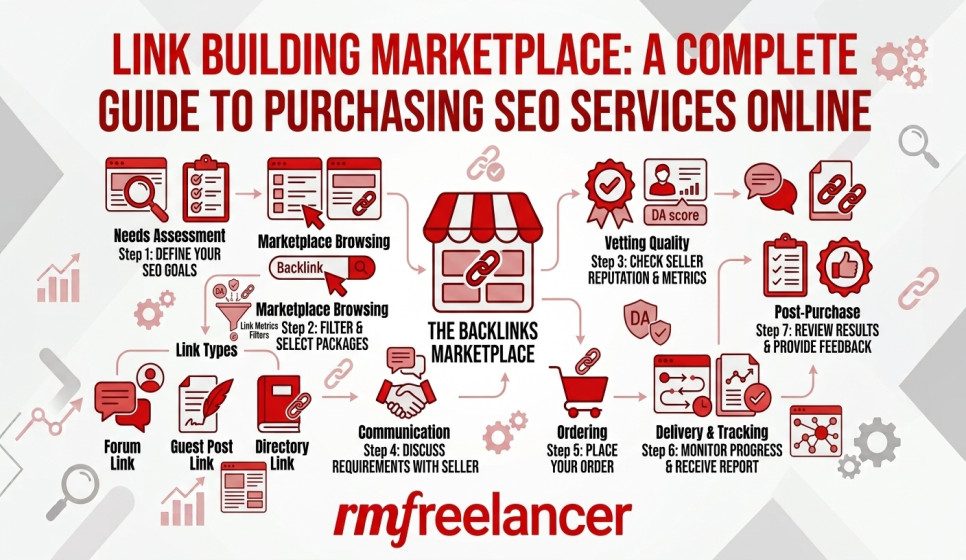
OctLink Building Marketplace: A Complete Guide to Purchasing SEO Services Online
A link building marketplace simplifies the process of locating outreach specialists, content marketers, digital PR professionals, and SEO agencies. Instead of reaching out to websites individually, buyers can assess providers, services, pricing, and delivery options in one unified platform. While this convenience is beneficial, it also presents a challenge: not every backlink offer delivers authentic marketing value.
A robust link can connect with a relevant audience and contribute to a valuable resource. Conversely, a poor link risks wasting funds or leading to unnecessary search-engine penalties.
Understand the Essentials of Link Building
Link building involves acquiring links from external websites to your own site’s pages. Search engines may view links as indicators of relevance and authority, but they represent only one aspect of SEO. Factors such as content quality, technical performance, user experience, competition, and search intent also influence visibility.
Marketplace services can encompass blogger outreach, guest contributions, niche edits, resource-page promotions, broken-link outreach, digital PR, expert commentary, local citations, and link audits. Each of these options serves a different purpose. For instance, a local citation can enhance location visibility, while a digital PR campaign may generate brand mentions in news or industry publications.
Clearly define the specific service needed: whether it’s genuine outreach, a prepared article, existing-page placement, prospects, or a report. The term “high-authority backlinks” alone is not an adequate deliverable.
Start with a Business Goal
Avoid purchasing links solely to boost the count of referring domains. Begin with a clear business objective, such as enhancing visibility for a service, promoting an original study, attracting traffic to a product guide, entering a new market, or increasing industry awareness.
Select pages that merit attention, like research, comparison, tutorial, or service pages. Address issues with slow, thin, or confusing target pages before undertaking promotion.
Assemble a brief outlining your website, audience, locations, topics, target pages, preferred industries, prohibited sites, language preferences, and reporting expectations.
Choose a Marketplace Provider with Care
While star ratings can be beneficial, they should not be your sole criterion. Read recent reviews for specific feedback concerning communication, placement quality, accuracy, and the longevity of links. Examine the provider’s portfolio and request examples relevant to your industry or audience.
Assess proposed sites for genuine audience engagement, a clear focus, original content, editorial standards, and a reputation that aligns with your brand. Third-party metrics can only serve as indicators.
Inquire about how prospects are selected and contacted, whether outreach is personalized, and if networks or subcontractors are involved. Understand the frequency of inventory reviews.
Compare Comprehensive Offers Rather Than Just Low Prices
Prices fluctuate based on expertise, research, publication standards, content length, industry complexity, and turnaround time. Extremely low-cost offers may rely on automation, recycled content, or subpar websites.
Evaluate the scope: number of links, target-page limits, content responsibilities, anchor guidance, revisions, reporting, replacements, delivery dates, and additional costs.
Value encompasses qualified visitors, credibility, and lasting resources—not merely links that no one notices.
Spot Unreliable Promises
Be wary of providers who guarantee a specific Google ranking, thousands of links overnight, instant authority, or permanent control over positions. No seller can manipulate search algorithms, competitors, website changes, or editorial choices.
Steer clear of profile links, comment spam, rewritten articles, hidden links, doorway pages, private networks, irrelevant posts, and sites primarily designed for selling links. Also, look out for duplicate content, excessive outbound links, forced anchors, and hidden URLs.
A professional provider will explain their methods and limitations. Secrecy is not a mark of quality. If a seller insists that a tactic must remain confidential, your ability to evaluate risk before publication diminishes.
Analyze the Website and Placement
A placement should be sensible for readers, relevant to your topic, feature original information, and provide visitors with a reason to click. Examine authorship, updates, surrounding links, categories, and the overall presentation.
Determine if the site features real editorial content or mostly irrelevant sponsored articles. An abundance of unrelated categories may suggest a primary focus on selling inventory.
Request a sample report that includes the domain, live URL, target page, anchor text, publication date, and pertinent quality notes. Screenshots are not sufficient; you should have the opportunity to review the actual pages.
Manage Anchor Text and Content Naturally
Anchor text refers to the clickable wording of a link. Repeatedly using the exact commercial keyword across numerous placements can appear forced and introduce unnecessary risk. Natural campaigns typically utilize brand names, URLs, descriptive phrases, and varied language according to the article’s context.
Do not try to insert a keyword into a sentence if it disrupts the content’s flow. Frequently, an informational article, research page, or homepage is a more fitting destination than a sales page. Discuss target pages and anchor text preferences before publication.
If content is part of the offer, clarify who is responsible for research, writing, editing, and approval. Request original material crafted specifically for the publication’s readers, not a generic piece created solely to host a link. Inquire about fact-checking, revisions, disclosures, and third-party references.
Start with a Small Trial
Initiate your efforts with limited placements or prospect research. Evaluate the quality of research, responsiveness, content, site selection, reporting, and adherence to instructions.
For larger campaigns, use milestones: first, approve the selection criteria, then review proposed opportunities, and finally assess live placements after publication. This approach allows you to adjust your strategy before committing the full budget.
Do not expand an order simply because the first delivery was unsatisfactory. Irrelevant domains, thin content, missing URLs, or evasive reports are signs to pause and reevaluate.
Before approving a campaign, consider how each placement aligns with your broader marketing strategy. A link might enhance a launch, fortify a partnership, or introduce expertise to a new audience. Request the provider to explain the audience and rationale for each opportunity. This straightforward review differentiates genuine promotion from mere inventory purchases and aids your team in creating valuable content for both readers and publishers.
Evaluate More Than Just Link Counts
Establish a baseline. Monitor referring domains, relevance, referral traffic, impressions, topic rankings, qualified leads, conversions, and assisted revenue. Exposure can be significant even in the absence of immediate ranking changes.
Refrain from measuring success based on a single keyword or short-term fluctuations. Take into account seasonality, new content, technical adjustments, competitors, and algorithm updates. A comprehensive report should detail completed work, live URLs, target pages, anchor text, dates, and any unresolved issues.
Gauge whether the campaign contributes to business results, rather than simply counting rows in a spreadsheet.
Safeguard Access, Ownership, and Budget
Generally, backlink providers do not require ownership of your domain, hosting, analytics account, or business profile. Avoid sharing passwords through standard messages; implement limited permissions for necessary access and revoke them afterward.
Keep payment, instructions, approvals, and documentation within the marketplace when its policies ensure buyer protection. Clarify what occurs if a placement is rejected, removed, redirected, or altered. Inquire about how long links are intended to remain active and whether replacements are included.
Maintain your own records of briefs, invoices, approved content, URLs, licenses, and outcomes.
Frequently Asked Questions (FAQs)
What is a link building marketplace?
ANSWER:
A link building marketplace is a digital platform where companies can evaluate and acquire services for outreach, digital PR, guest content, and various SEO link-building initiatives.
Are marketplace backlinks secure for all websites?
ANSWER:
The safety of backlinks depends on how they are sourced. Relevant editorial placements from trustworthy websites are typically more defensible than automated, unrelated, or hidden links.
Can a provider assure improved Google rankings?
ANSWER:
No. Rankings are affected by factors such as content, technical quality, competition, search intent, user experience, and algorithm updates. A reliable provider should clarify these constraints.
What contributes to a backlink's value?
ANSWER:
A valuable backlink is pertinent to the topic, hosted on a reputable website, accompanied by informative content, and capable of directing interested visitors to the target page.
Should I opt for the cheapest link-building package?
ANSWER:
Not necessarily. Extremely low prices may suggest automated processes, low-quality websites, recycled content, or minimal quality control. Instead, evaluate the complete deliverables and potential business value.
What details should a link-building report contain?
ANSWER:
The report should list live URLs, linking domains, target pages, anchor text, publication dates, placement specifics, and any commitments for replacements or maintenance.
Is guest posting an effective method for link building?
ANSWER:
It can be effective when the article is original, relevant to the audience of the publication, and crafted to deliver genuine information. Generic articles created solely for links carry less value.
How many backlinks should I acquire?
ANSWER:
There is no one-size-fits-all monthly quantity. The pace of the campaign should reflect available opportunities, content quality, business objectives, budget, and the organic growth of your website.
Do link providers require access to my website?
ANSWER:
Typically not. Most link-building tasks can be performed without access to domain, hosting, analytics, or business profiles. If access is necessary, provide only limited permissions.
How can I evaluate a link-building provider?
ANSWER:
Start with a small project or a limited number of placements. Assess site relevance, content quality, communication effectiveness, reporting accuracy, live URLs, and adherence to your instructions before scaling up.
Final Summary,
A link building marketplace can be effective if you establish clear goals, select meaningful pages, research providers, compare deliverables, scrutinize sites, and commence with a controlled test. Prioritize relevance, valuable content, transparent reporting, natural context, and secure ownership over sheer volume. Meticulous evaluation can foster sustainable visibility without unnecessary risks.
Have questions about our services? Contact us today for fast, reliable, and professional customer support always.
Website: https://rmfreelancer.com/
Email: support@rmfreelancer.com
Phone: +1 307-243-8976
RMFreelancer Office:
30 N Gould St, Ste R, Sheridan, WY 82801, USA


