04
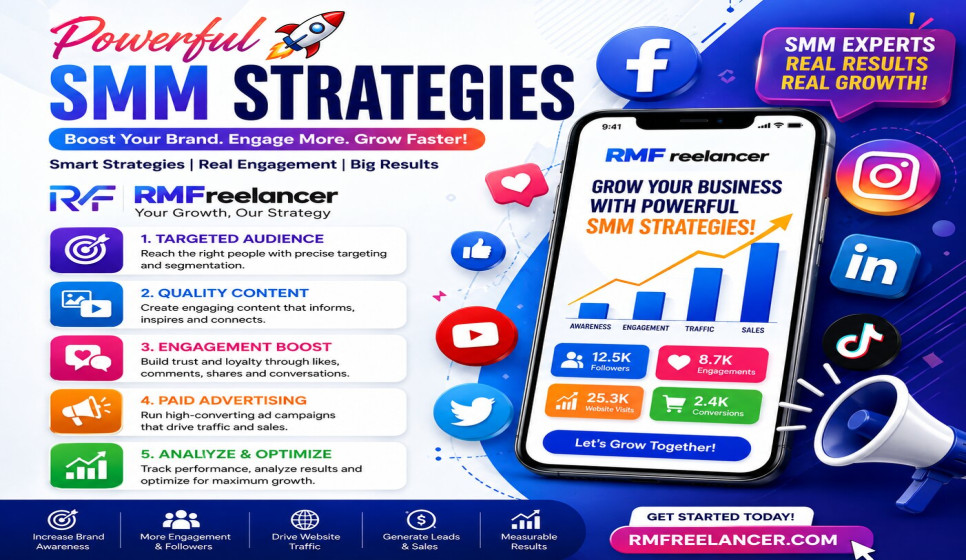
AugPowerful SMM Strategies for Better Online Customer Reach
Social media marketing has emerged as one of the most effective means for companies to connect with customers, promote their products, and establish lasting brand recognition. However, merely setting up social media accounts and sharing sporadic posts is insufficient for achieving significant outcomes. Customers encounter countless posts daily, which necessitates that businesses adopt focused and strategic approaches to differentiate themselves.
Effective social media marketing tactics enable brands to connect with the appropriate audience, foster engagement, enhance trust, and lead potential customers toward making a purchase. Whether a business is venturing into digital marketing for the first time or seeking to enhance its current campaigns, a well-structured SMM strategy can bolster online visibility and improve customer interaction.
Grasp the Target Audience
The cornerstone of successful social media marketing is a thorough understanding of the target audience. Businesses must ascertain who their customers are, their needs, the challenges they face, and the platforms they most frequently use.
Audience analysis can encompass age, location, occupation, income level, interests, purchasing behaviors, and online activities. For instance, a company that sells professional software might focus its efforts on LinkedIn, while a fashion or beauty brand would likely see better results using Instagram and TikTok.
A deep understanding of the audience also enhances the quality of content. When businesses comprehend what resonates with their customers, they can create posts that address questions, resolve issues, entertain followers, and provide helpful insights. Content that is relevant will likely garner more likes, comments, shares, and inquiries.
Establish Clear Marketing Objectives
Social media efforts should consistently align with a defined business goal. Without specific objectives, measuring success or identifying effective strategies becomes challenging.
A brand might utilize social media to enhance awareness, generate leads, drive traffic to their website, showcase new products, improve customer service, or boost online sales. Each objective demands a slightly different strategy.
For example, a brand aiming to increase awareness may emphasize reach, video views, and follower growth, while a business focused on sales may monitor website clicks, product inquiries, conversion rates, and completed transactions.
Objectives should be measurable and realistic. Rather than setting a vague goal of “increasing engagement,” a business could aim to boost average post engagement by a defined percentage within a specific timeframe. Clear goals result in a more organized and effective social media marketing strategy.
Generate Valuable and Varied Content
Content is the heart of every SMM campaign. High-quality content should offer value while also embodying the brand’s personality and objectives.
Businesses should refrain from posting exclusively promotional material. Customers are more inclined to follow and engage with brands that present a diverse array of content. Educational posts can clarify industry concepts or show product usage. Entertaining posts might include humorous videos, relatable anecdotes, or innovative trends. Inspirational content can feature customer success stories, motivational messages, or the company’s mission.
Behind-the-scenes content adds a personal touch to a brand, making it feel authentic. Businesses can highlight product creation, introduce team members, share daily operations, or illustrate the service delivery process.
Utilizing a variety of formats is equally essential. Short videos, carousels, stories, live recordings, polls, infographics, and customer testimonials can sustain audience interest. A diverse content strategy also enables businesses to determine which formats elicit the strongest responses.
Emphasize Short-Form Video
Short-form video has become an influential tool for grabbing attention and conveying messages succinctly. Platforms like Instagram, TikTok, YouTube, and Facebook offer opportunities for businesses to engage both current followers and new audiences.
Short videos can showcase products, answer common questions, share tips, introduce staff members, or feature customer testimonials. High-quality production isn’t always necessary; good lighting, clear audio, compelling scripting, and a relevant message often outweigh the need for an extensive budget.
The initial moments of a video are especially crucial. Businesses should begin with an engaging question, a valuable promise, an unexpected fact, or a visually captivating scene. Including captions is also vital since many viewers watch without sound.
Consistency supersedes the creation of one standout video followed by inactivity. Regular short-form content can progressively enhance reach and maintain brand visibility.
Implement Strong Visual Branding
A coherent visual identity makes a brand easily recognizable across various social media channels. Colors, fonts, logos, image styles, and graphic layouts should be in harmony with the overall brand personality.
A sophisticated visual style does not need to be intricate. Even straightforward designs can appear refined when consistent and easily comprehensible. Businesses should utilize high-resolution images, legible text, balanced layouts, and suitable branding elements.
Effective visual branding also enhances trust. When customers observe a cohesive presentation across social media, websites, and advertisements, the business appears more established and credible.
Encourage Meaningful Interaction
Social media should be viewed as a dialogue rather than a one-sided advertising platform. Companies that engage actively with their audiences tend to build stronger relationships and foster customer loyalty.
Responding to comments and direct messages indicates to customers that their feedback is valued. Brands can further promote interaction by posing questions, creating polls, soliciting feedback, and inviting followers to share their experiences.
Engagement should feel organic rather than contrived. Instead of using generic questions that lack relevance, businesses should employ prompts that inspire thoughtful responses. For instance, a food brand might invite followers to share their favorite meal, while a tech company could ask customers which feature they find most useful.
Timely responses are equally crucial. Customers may use social media to inquire about pricing, delivery, availability, or product specifications. Prompt and helpful answers can significantly influence their purchasing decisions.
Leverage User-Generated Content
User-generated content is created by customers rather than the business itself. It can include product images, reviews, testimonials, unboxing videos, or social media mentions.
This type of content is beneficial as it serves as social proof. Potential customers often trust the experiences of actual users more than traditional advertising. Showcasing customer content can also make existing customers feel valued.
Businesses can encourage user-generated content by creating branded hashtags, offering incentives, hosting contests, or simply requesting that customers tag the brand. Prior to publishing customer content, the business should seek permission and provide appropriate credit.
Enhance Discoverability with Keywords and Hashtags
Social media platforms increasingly function like search engines. Users look for products, services, advice, and local businesses directly within these platforms.
Organizations should employ relevant keywords in profile descriptions, captions, video titles, and image text. Location-based terms are particularly useful for businesses targeting a specific city or region.
Strategic use of hashtags can bolster discoverability. A mix of broad, industry-specific, niche, and location-related hashtags often proves more effective than a lengthy list of unrelated terms. Hashtags should align with the actual content and intended audience.
Search-friendly content has the potential to attract users long after publication, especially when it addresses common inquiries or offers practical information.
Utilize Paid Advertising Judiciously
While organic content is vital, paid social media advertising can expedite a business’s ability to connect with specific audiences. Advertising platforms enable brands to target users based on location, interests, demographics, online behaviors, and previous interactions with the business.
Effective advertising starts with a clear goal. A campaign might center on driving website visits, generating leads, increasing video views, facilitating app downloads, or promoting product sales. Each advertisement should feature a compelling visual, a succinct message, and a direct call to action.
Businesses should experiment with different images, headlines, audience segments, and offers. Tracking outcomes allows them to allocate more resources to campaigns that yield the best results while minimizing investment in less successful ads.
Evaluate Performance and Continuously Improve
A robust SMM strategy is perpetually evolving. Businesses should regularly analyze performance data to gain insights into their content's effectiveness.
Key metrics may include reach, impressions, engagement rates, video completion rates, profile visits, website traffic, leads, and conversions. These figures can uncover which topics and formats captivate the most attention.
Analytics should inform practical enhancements. If educational videos yield positive results, the business can increase their output. Conversely, if promotional posts receive minimal engagement, adjustments to the messaging or offerings may be necessary.
Foster Long-Term Customer Engagement
Effective social media marketing hinges on consistency, relevance, creativity, and authentic communication. Companies that grasp their audience, produce valuable content, stimulate engagement, utilize video, and assess performance are more likely to cultivate a strong online presence.
The goal isn’t merely to accumulate followers; the true aim is to attract the right individuals, gain their trust, and navigate them toward meaningful relationships with the brand. With a thoughtful and adaptable SMM strategy, businesses can reach a wider customer base, enhance loyalty, and achieve sustained digital growth.
Frequently Asked Questions (FAQs)
What are strong SMM methods to boost customer reach?
ANSWER:
Strong SMM methods include learning about your audience, creating engaging content, choosing the right platforms, sharing content regularly, and promoting it to the right people to connect your business with more relevant online users.
How can SMM help a business become more visible online?
ANSWER:
Sharing helpful and interesting content often helps a brand get more attention, encourages people to interact on social media, and makes it easier for new customers to find the business through different online channels.
Which social media platforms are best for reaching customers?
ANSWER:
The best platform depends on who your customers are and what your business does. Platforms like Facebook, Instagram, YouTube, LinkedIn, TikTok, and Pinterest can all be useful for reaching new customers.
What kind of content can draw more social media users?
ANSWER:
Content like educational videos, helpful articles, product showings, eye-catching images, customer stories, tips for your industry, polls, and interactive posts can make people notice and interact with your brand.
Can SMM help businesses reach customers from other countries?
ANSWER:
Yes. Social media lets businesses talk to people in different parts of the world by creating content, using the right language, targeting the right markets, and running promotions that fit those areas.
How can businesses get more interaction from their social media followers?
ANSWER:
Businesses can reply to comments, answer questions, start conversations, post things that invite people to take part, ask for feedback, and share information that people care about.
How can businesses know if their SMM campaigns are reaching customers?
ANSWER:
They can track things like how many people see their posts, how many times they are shared, how many people engage with the content, how many visit their profile, how many click on links, how much website traffic comes from social media, how many followers they gain, and how many people take action like making purchases.
What makes an SMM strategy work well for keeping customers engaged over time?
ANSWER:
A good long-term strategy uses a clear brand image, valuable and interesting content, targeting the right audience, being honest and friendly in communication, checking how well things are working, and making changes based on what customers do and say.
Have questions about our services? Contact us today for fast, reliable, and professional customer support always.
Website: https://rmfreelancer.com/
Email: support@rmfreelancer.com
Phone: +1 307-243-8976
RMFreelancer Office:
30 N Gould St, Ste R, Sheridan, WY 82801, USA


